Most software teams have a robust code review process, and that is a significant achievement for modern engineering standards. These reviews are essential for catching bugs, enforcing style guides, and validating logic before it reaches a production environment. However, pull requests are fundamentally designed to answer a narrow, binary question: is this specific change safe to merge? What they rarely address is the more profound, holistic question regarding the overall health and trajectory of the codebase.
This distinction is more than academic; it is a matter of long-term operational stability. A standard review can confirm a feature is well-implemented without noticing that the underlying architecture is becoming increasingly difficult to scale. It might miss the quiet accumulation of technical debt or the persistence of outdated security practices hiding in the corners of the system. These structural cracks often emerge slowly, and by the time they become visible to the naked eye, the cost of remediation has usually skyrocketed.
The Context Gap in Technical Audits
Traditional technical audits are undeniably valuable, but they are notoriously expensive in terms of time. A comprehensive architecture review can take days or even weeks depending on the complexity of the project. This investment is necessary because deep understanding requires context. One must map how dependencies flow, how data moves through various layers, and where responsibilities are concentrated. Unfortunately, in a fast-moving environment, the codebase may have already evolved by the time the audit report is delivered.
While static analysis tools like SonarQube or Semgrep are excellent at flagging isolated issues, such as duplicated logic or vulnerable dependencies, they generally operate on predefined, rigid rules. They are highly effective at identifying what violates a specific pattern but are less capable of understanding why that pattern matters within a unique system. Context is the missing ingredient. An enterprise application built with ASP.NET Core carries vastly different architectural risks than a lightweight Node.js microservice. Without factoring in the specific framework, deployment model, and database strategy, any analysis remains generic and, ultimately, unhelpful.
Building a Map Before the Search
To bridge this gap, I have spent the last few months refining a workflow for auditing software projects using structured prompts and specialized AI agents. The first, and arguably most critical, step in this process is project discovery. Before a single line of logic is analyzed, the system builds a comprehensive map of the project. This involves identifying frameworks, architectural layers, configuration patterns, and infrastructure integrations. This discovery phase provides the AI with the necessary baseline to understand the rules of the road for the specific system it is evaluating.
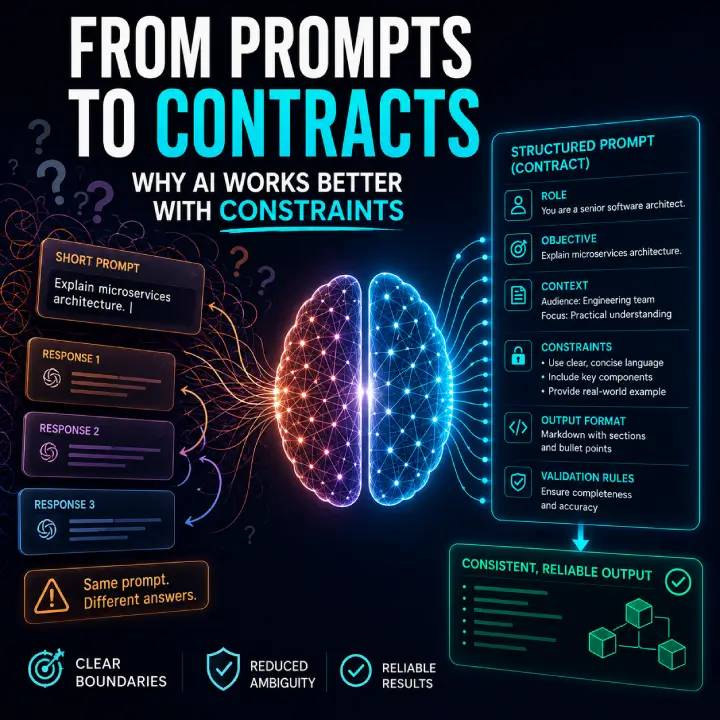
Once the foundation is established, the focus shifts to prompt design. A vague instruction like "review this repository" is a recipe for generic feedback. However, a structured approach that directs the AI to evaluate architectural coupling, database access patterns, and authentication mechanisms changes the depth of the output entirely. This shift transforms the AI from a simple assistant into a focused technical auditor capable of spotting structural inconsistencies that traditional tools might overlook.
The Power of Specialized Agents
The most significant breakthrough in this workflow came from moving away from a single, broad analysis in favor of specialized agents. Software systems are too complex for a generalist approach; different domains require different lenses. In my current process, I deploy four distinct agents.
| Agent Specialization | Core Analytical Focus | Critical Deliverable |
| Architecture | Layering, modularity, and dependency flow direction | Coupling and boundary violation map |
| Security | Authentication patterns, serialization, and config defaults | Attack surface and vulnerability log |
| Performance | Inefficient queries, blocking operations, and costly loops | High-throughput bottleneck report |
| Maintainability | Dead code, complexity spikes, and architectural eras | Technical debt tipping point index |
By separating these concerns, each agent operates with a narrower, clearer objective. The results are significantly more granular, and when the findings are synthesized into a final report, they provide a multi-dimensional view of the system’s health.
Turning Findings into Decisions
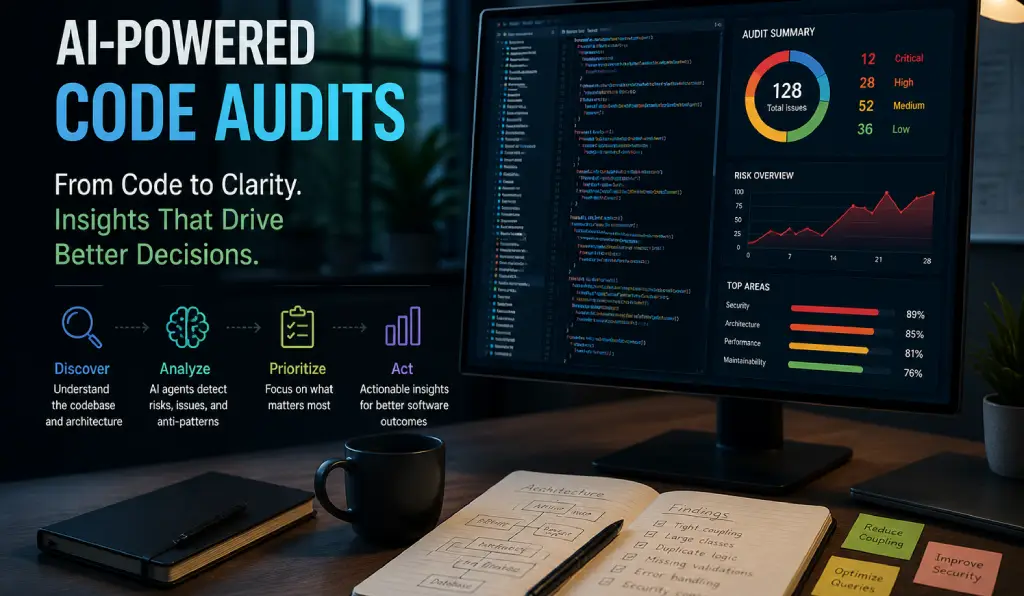
Finding an issue is only half the battle; the real value lies in making those findings actionable. Without intelligent prioritization, an audit quickly becomes noise that developers are tempted to ignore. A useful audit must explain what the issue is, why it matters, and what the immediate risk profile looks like. A vulnerable authentication flow represents a critical operational risk, whereas inconsistent naming conventions are a medium-term friction point.
Classification turns an audit into a decision-making tool for technical leads and stakeholders. Critical issues demand immediate sprints, while high-priority items can be slotted into upcoming roadmaps. This structured prioritization allows teams to stop reacting to the loudest fire and start addressing the most significant risks.
Accelerating Clarity
This approach has proven most effective during legacy modernization, framework migrations, and technical due diligence. In these scenarios, the ability to understand a complex system quickly is the most valuable asset an engineer can have. The goal is not to replace human judgment or the expertise of a seasoned developer. Instead, it is about accelerating clarity.
By using AI to handle the heavy lifting of pattern recognition and discovery, we reduce the time spent on manual exploration and increase the time spent on high-level decision-making. The future of code auditing isn't a choice between human and machine; it’s about combining human intuition with intelligent systems to identify risks earlier and build more resilient software. The real opportunity isn't replacing the code review, it’s ensuring that by the time we hit merge, we aren't just shipping code that works, but code that lasts.