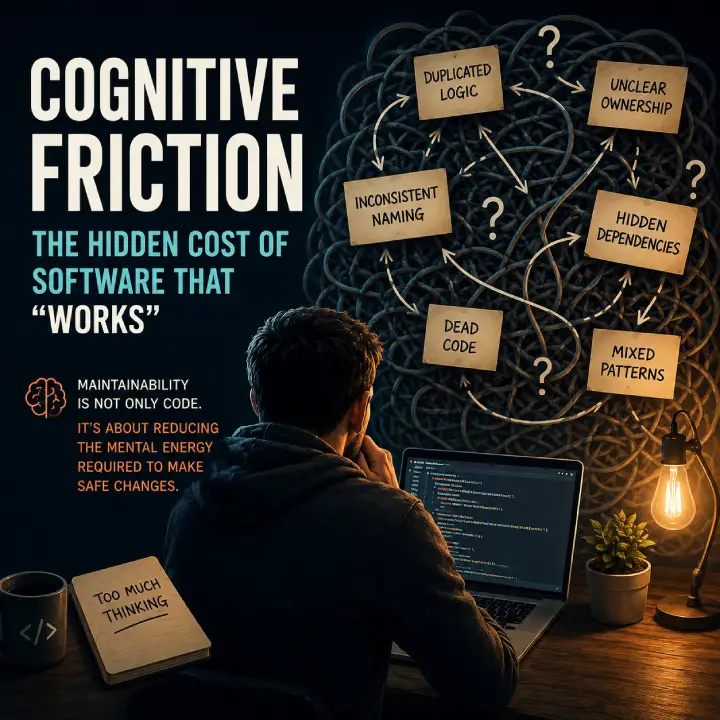
There’s a common assumption in software engineering that if AI helps you write code faster, the work somehow becomes less valuable. As if speed reduces craftsmanship. As if using assistance inherently means understanding less.
I used to wrestle with that idea myself. Not because I doubted the potential of LLMs, but because early experiences with AI-assisted coding felt incomplete. It was fast, yes. It was useful, occasionally. But it often felt disconnected from the gritty reality of maintaining production systems—respecting established patterns, preserving delicate architecture, and implementing changes without leaving a trail of technical debt for your future self.
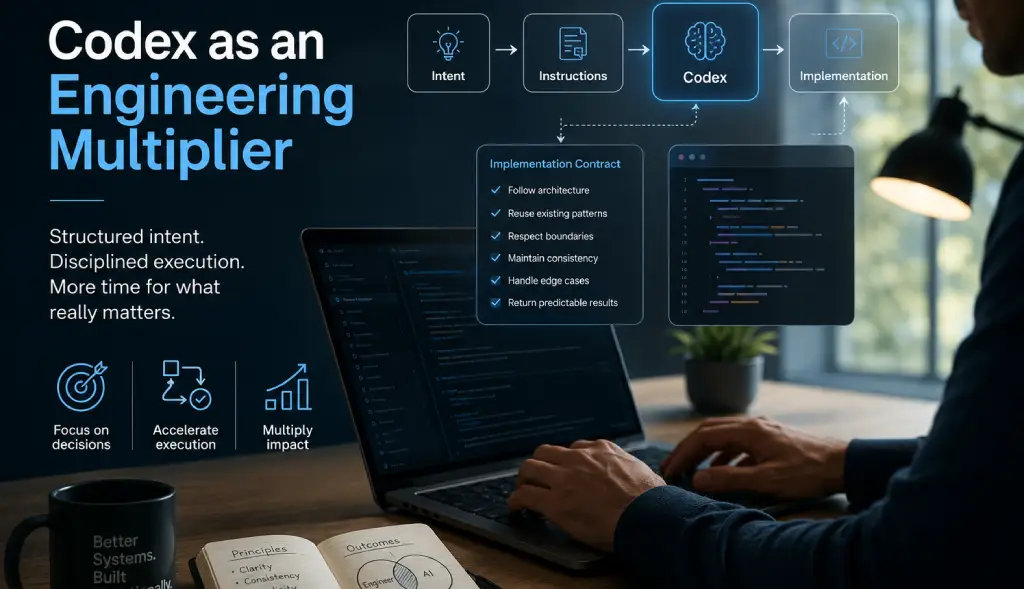
Over time, I realized the friction wasn't in the tool, but in my mental model of what the tool was for. The value was never in having an AI generate code for me. The value was in reducing execution overhead. That distinction changed how I work. Today, I don’t use coding models as a replacement for engineering; I use them as an engineering multiplier.
The Hidden Cost of Repetition
We often talk about software engineering as if every day is spent solving novel, groundbreaking problems. It isn’t. A surprising amount of engineering work is deeply repetitive. This isn't to say it’s trivial; implementing a standard data flow, following an existing validation pattern, or refactoring a boilerplate-heavy module is vital for system health.
But while this work is necessary, it is also expensive. The real expense isn't just the time spent typing; it’s the fragmentation of attention. Every repetitive implementation task pulls you out of high-level architectural thinking and shoves you into execution mode. That context switch is a tax on your cognitive load. It fragments your focus, making it harder to jump back into the "why" once you've spent two hours on the "how."
The bottleneck was never the act of writing code. It was the translation of intent. Before I even touched the keyboard, I usually had the rules defined in my head: which modules to touch, which conventions to preserve, and what "good" looked like for this specific ticket. The code itself was just the final, mechanical translation of that intent. When you repeat that translation dozens of times a week, you aren't innovating; you're just a very expensive compiler.
Structure as a Force Multiplier
This is where the shift happened. I stopped thinking of AI as a source of ideas and started treating it as a compression layer for execution.
The quality of AI output is a direct reflection of the quality of your instructions. Vague requests create vague implementations. But when you move away from "write a function that does X" and toward defining implementation contracts, the relationship changes. By providing the AI with the specific constraints, the existing patterns it must follow, and the principles that define success in your codebase, you aren't just generating code. You are inviting the AI to operate inside an existing system of rules.
This requires more discipline, not less. AI effectively amplifies whatever environment it is placed in. If your process is inconsistent, AI will accelerate that inconsistency. If your architecture is a mess of spaghetti, it will help you cook more spaghetti faster than ever before. But if your practices are structured and your boundaries are clear, the AI becomes incredibly effective at handling the mechanical execution, leaving you with the energy to actually judge the result.
From Effort to Leverage
There is a difference between effort and value. Repetitive execution requires significant effort, but higher-level decisions create disproportionate value. System design, boundary definition, risk identification, and tradeoff analysis—these are the areas where engineering judgment actually moves the needle for a business.
Traditional Workflow:
[ Architectural Design (20%) ] -> [ Repetitive Execution & Mechanical Typing (80%) ]
AI-Leveraged Workflow:
[ Architectural Design & Constraint Definition (60%) ] -> [ AI Execution (10%) ] -> [ Rigorous Review & Edge-Case Validation (30%) ]
When execution consumes the majority of your day, these higher-value areas get whatever leftovers of your attention remain. By using AI to compress the execution phase, I’ve found I’m not doing less engineering. I’m doing less mechanical translation and more actual problem-solving. I’m spending more time on quality review and strategic thinking.
This isn't a shortcut; it's leverage. In any other field of engineering, we celebrate tools that provide leverage. We don't ask a structural engineer to hand-calculate every stress point when software can do it in seconds; we expect them to spend that saved time ensuring the integrity of the entire bridge. Software should be no different.
The real multiplier isn't the ability to generate lines of code. It's clarity. Clear thinking, clear boundaries, and clear intent. The better your internal engineering model is, the more useful these tools become. They don't replace your thinking; they extend your ability to execute on it, protecting your energy for the work that actually requires a human at the helm.